Illustration
My practice in classical iconography.
An ongoing body of digital illustration that draws Bharatanatyam, the navarasa and the nine forms of Durga out of devotion and into standalone art. I think of it as my Indigenous Modern work — the root system everything commercial grows out of.
Why it exists
Before any brief, there is this. A self-directed body of work that keeps returning to the same well — classical Indian iconography, drawn entirely on the iPad and pulled into the frame I call Indigenous Modern: bold contemporary palettes, painterly texture and halftone grounds, wrapped around forms that are centuries old.
I have trained in Bharatanatyam for fifteen years, and the dance is a vocabulary I already carry in the body — the hand gestures, the stances, the way a single expression has to hold a whole story. Illustration lets me freeze those transient movements into something permanent and look at them slowly. My training at MSU Baroda (BVA, Applied Arts, double gold medalist) gave me the craft to do it.
This is the root system the commercial work grows out of. The character work I make for clients — matriarchs mid-gesture, mascots that carry a whole brand in a glance — is downstream of the hours spent here, teaching myself to make a hand or a face speak.
The Mudra Series
Mudras — an illustration series isolates the hand gestures of Bharatanatyam and elevates them on their own. I strip the dancer's body away so nothing competes with the gesture — what's left is the spiritual weight and the narrative load each mudra was built to carry.
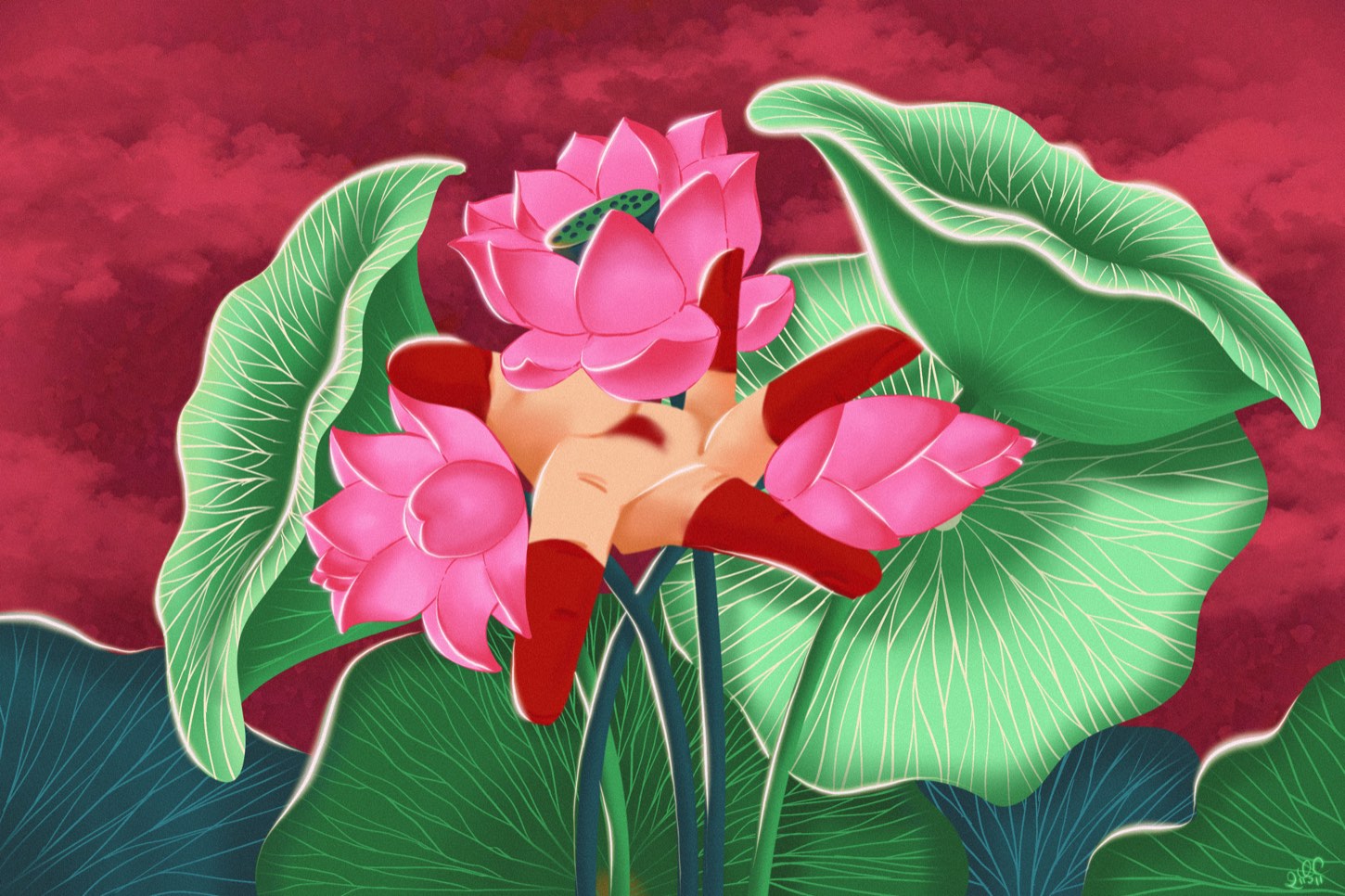
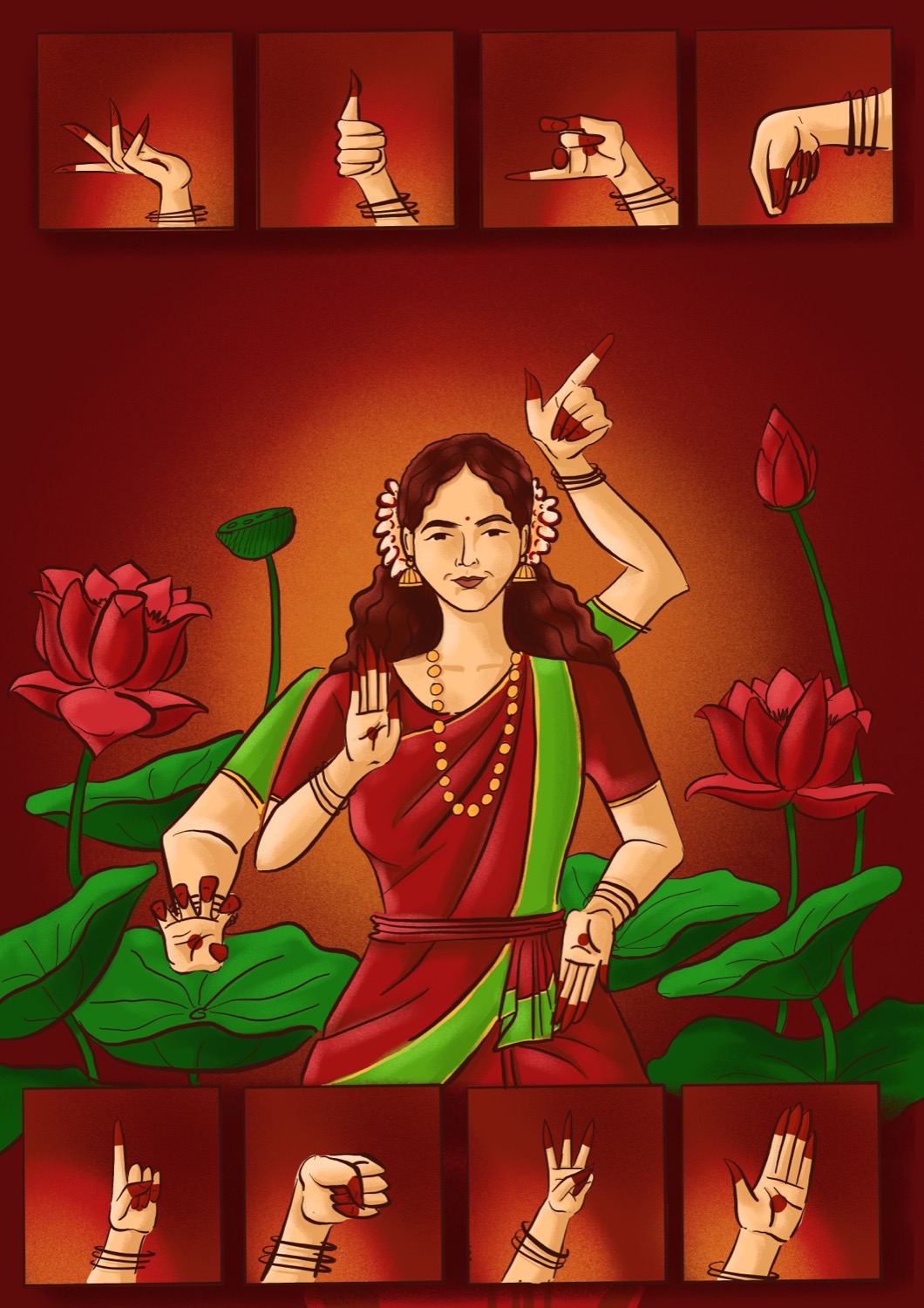
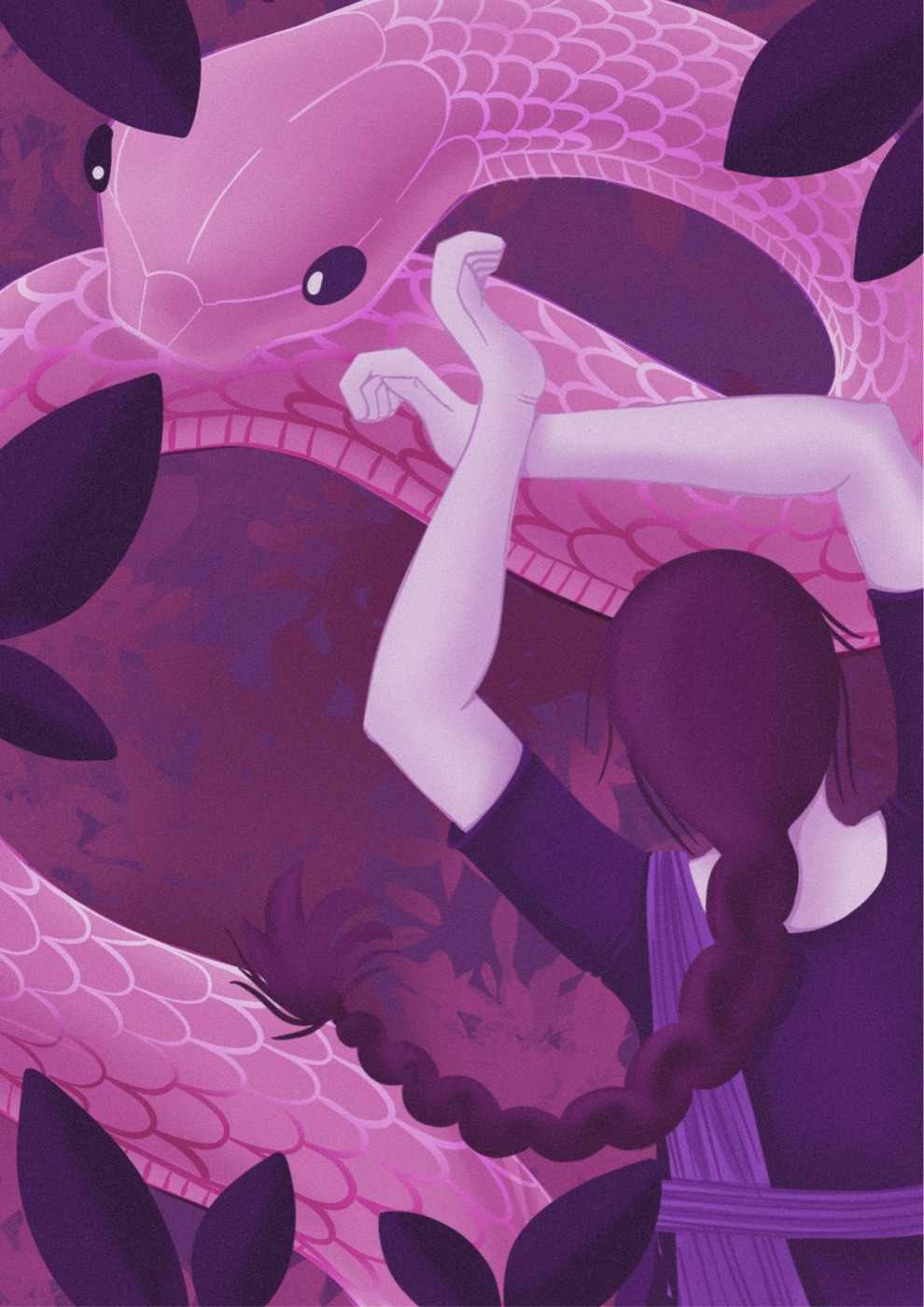
Ala-Padma (the lotus bloom) cradles pink blooms with red-tipped alta fingers; Sarpashirsha (the serpent hood) coils an arm inside a pink snake, holding the Krishna–Kaliya story in a single shape. A composite key gathers a central dancer with eight gestures framed around her — the index to the whole series.
Dance is a language the body forgets the instant it stops moving — illustration is how I keep it.
The Navarasa Explorations
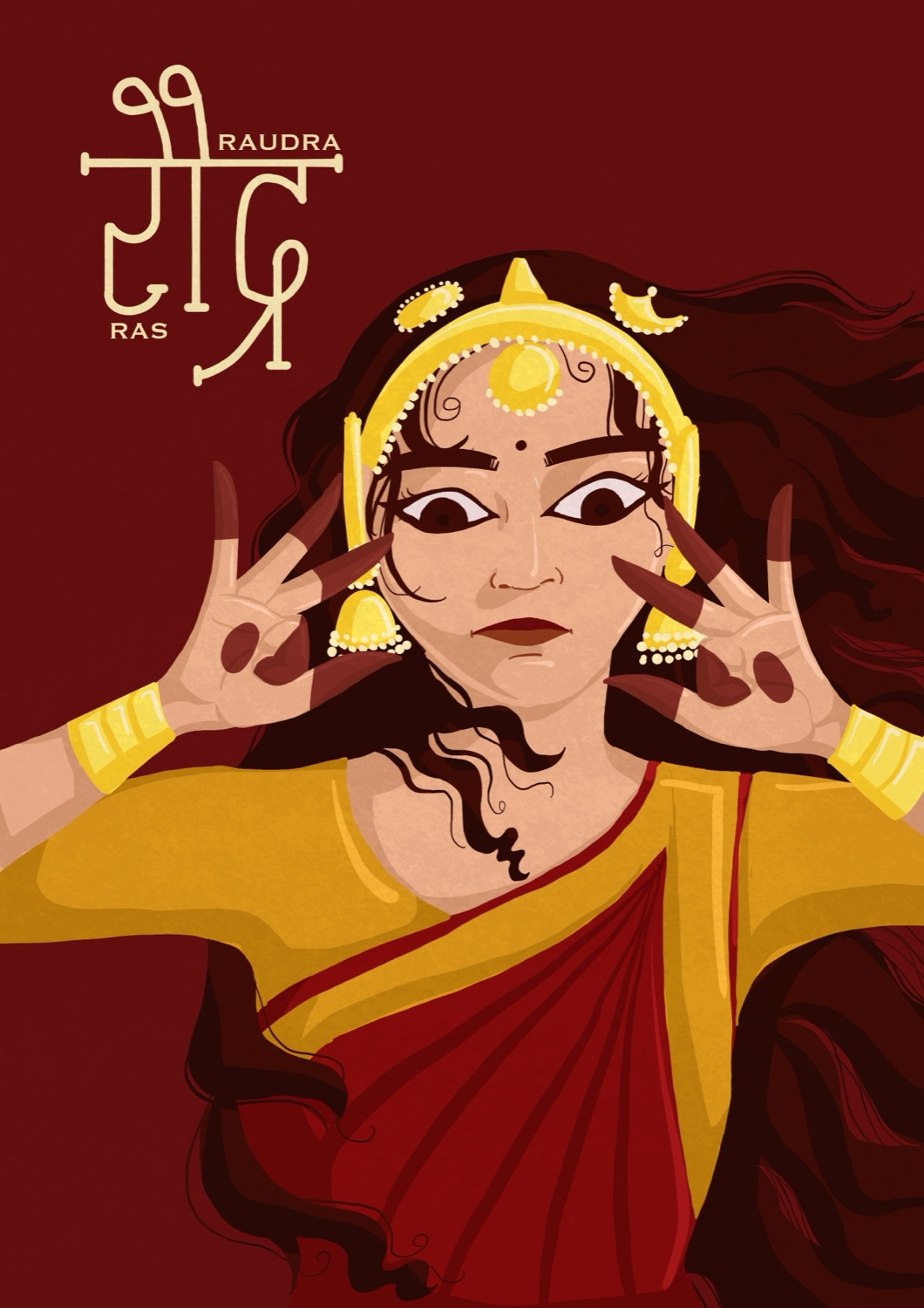
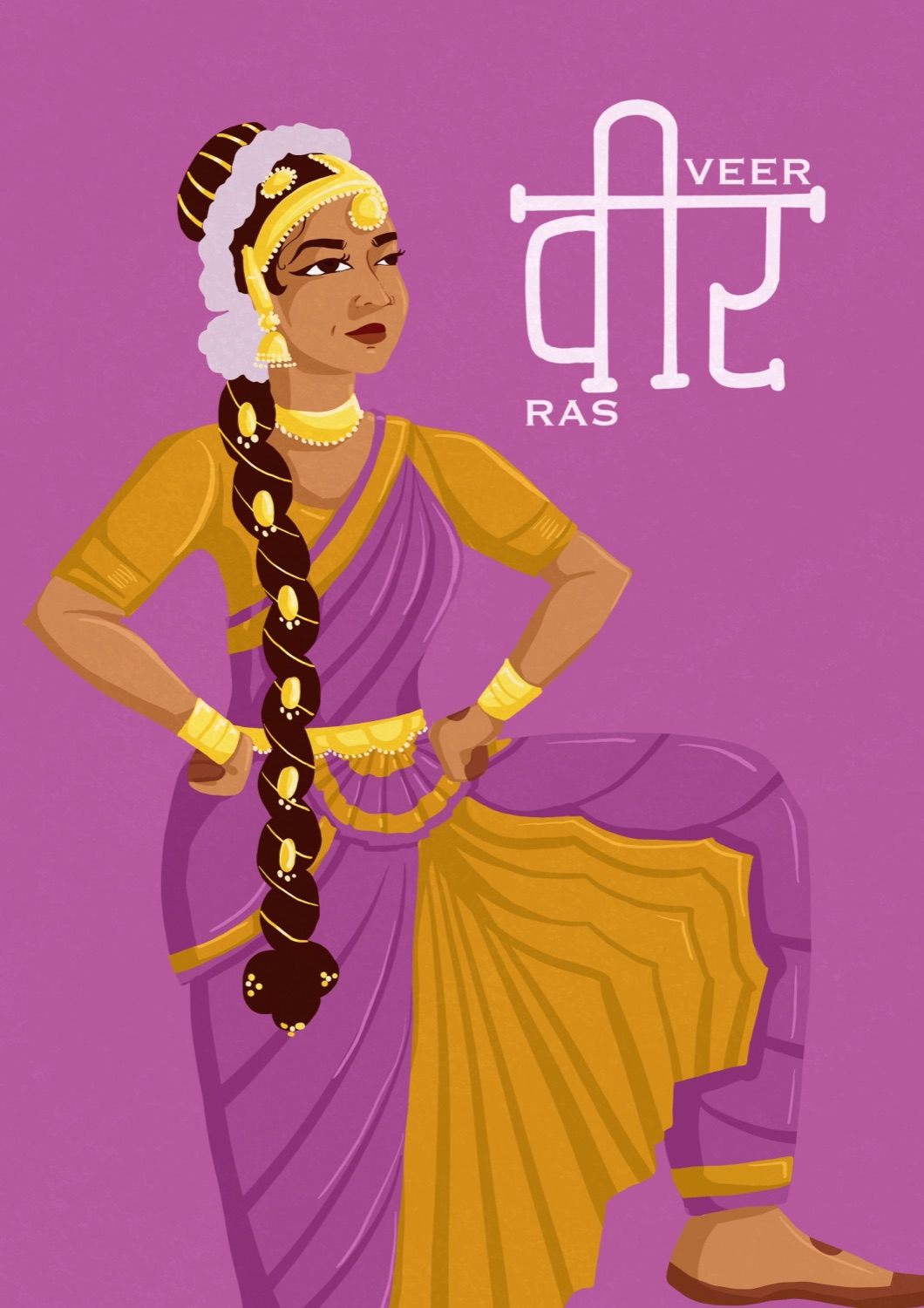
The navarasa are the nine universal aesthetic emotions of Indian performance. I map each one through colour theory and a single stylised dancer — converting a kinetic feeling into a static image, every piece named on its own Devanagari-and-English title card.
Raudra (anger) is a close-up of flying hair and claw-mudra hands on blood-red; Veer (heroism) plants a dancer hands-on-hips in a warrior stance over magenta. Across the set the background colour is the emotion — burnt orange for peace, aubergine for fear, cool blue for compassion.
The Navadurga Series
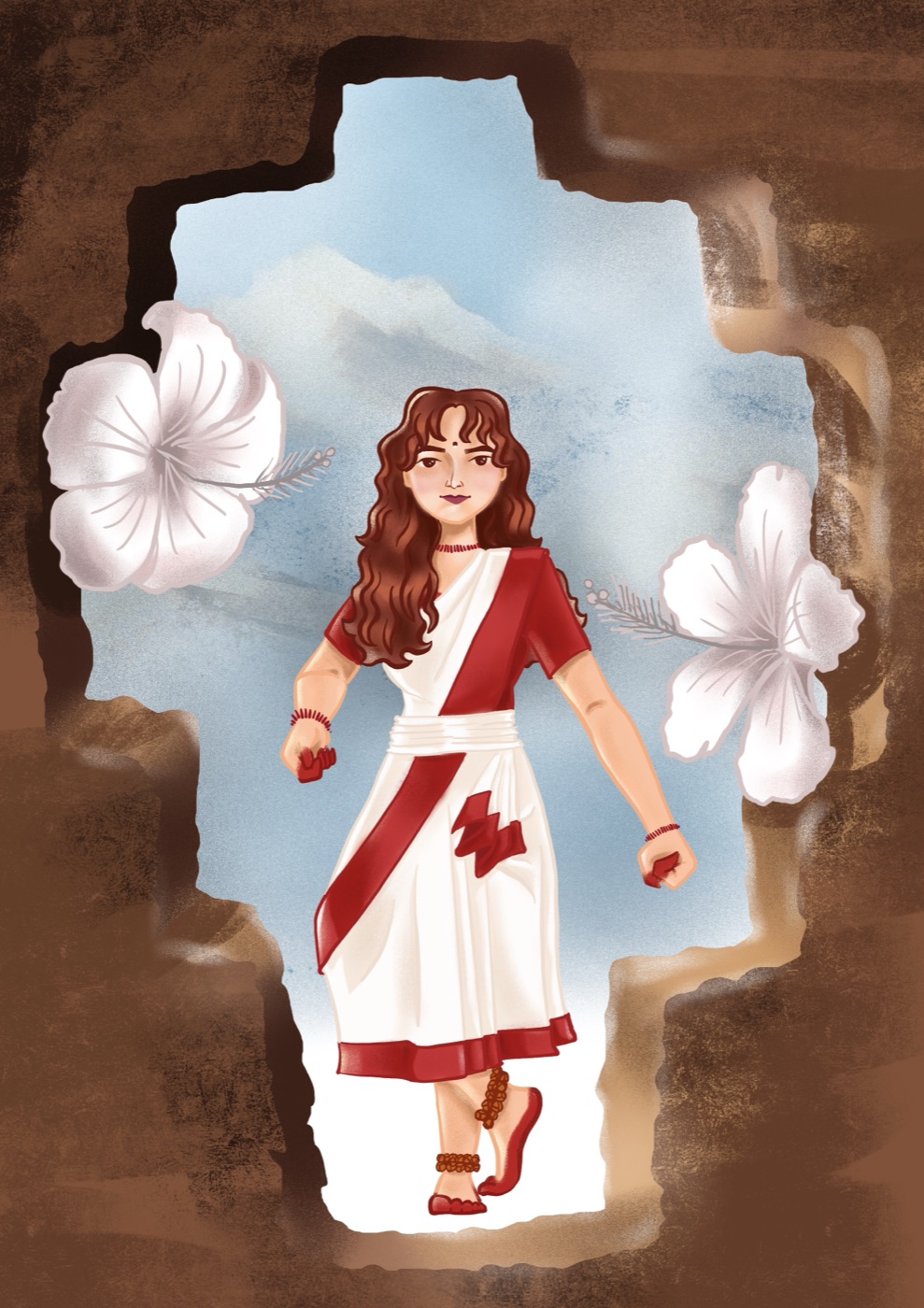
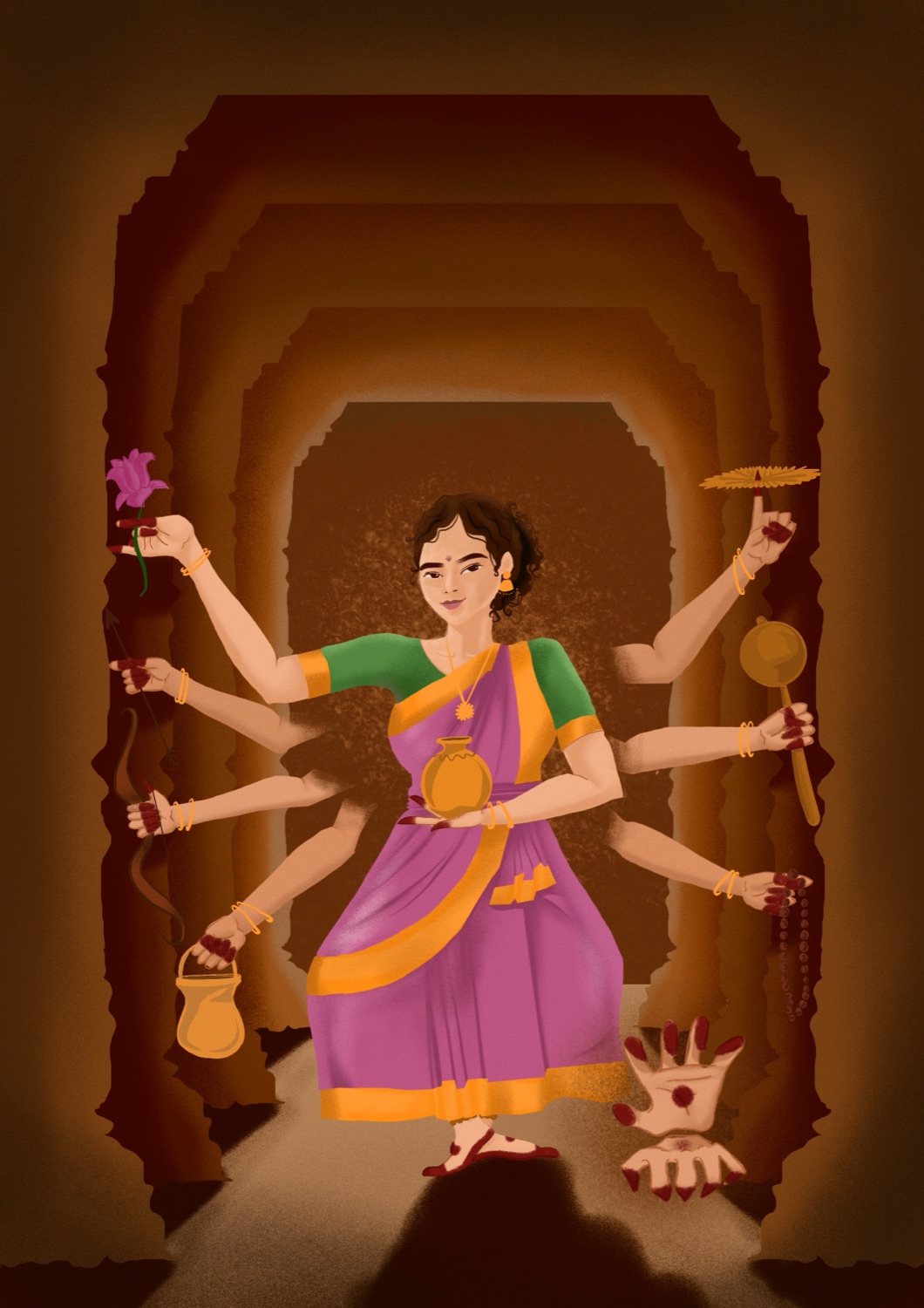
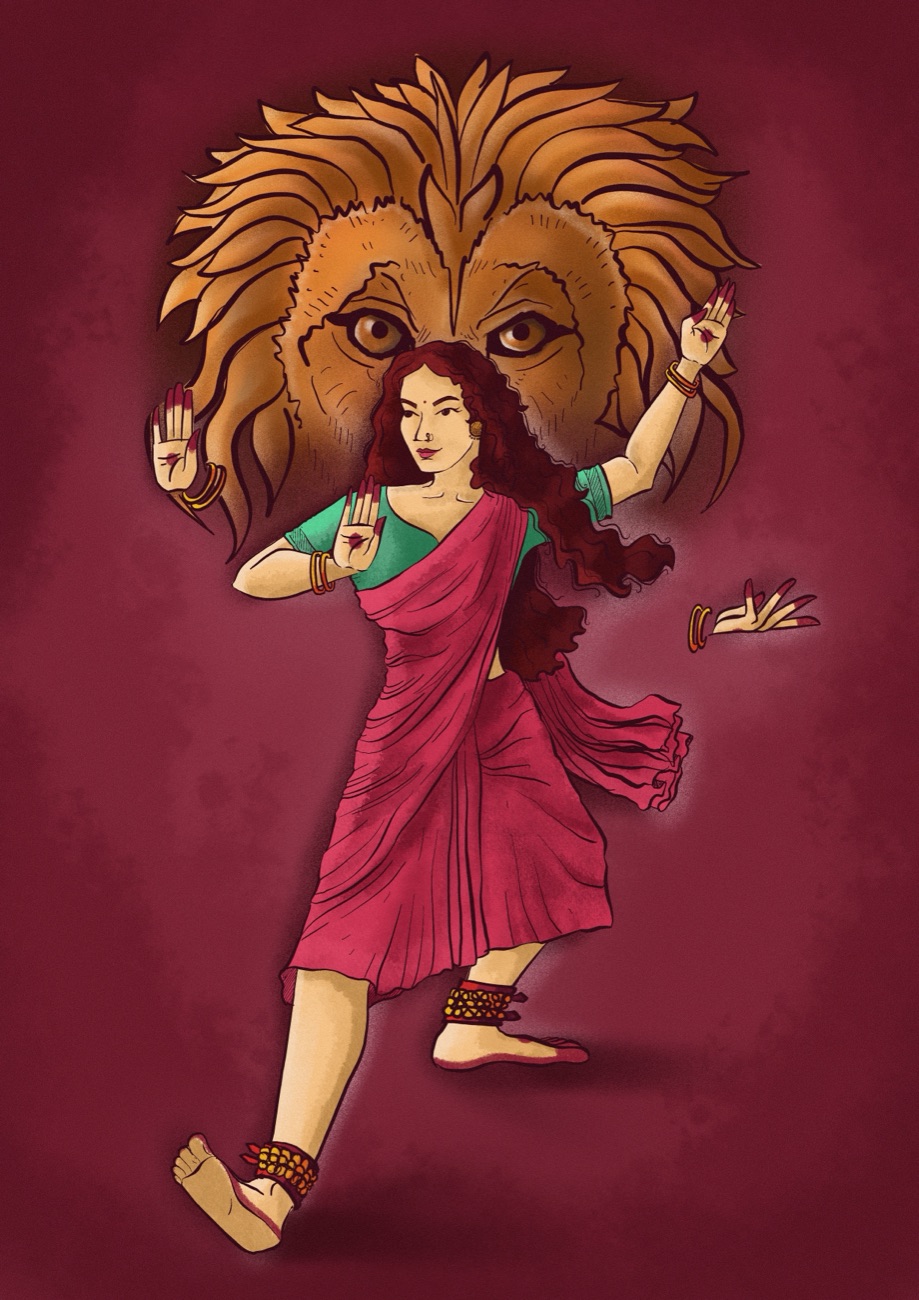
I titled this one Navdurga — through dance poses, and I mean it literally: each of the nine forms of Goddess Durga is built directly from a classical Bharatanatyam pose I know in the body. The dance becomes the armature, and onto it I layer mythological symbolism, temple architecture and the divine-feminine archetype — painterly, inked, in deliberately contemporary palettes.
A lion-mounted form dances in a pink saree with red-tipped tripataka fingers, a vast golden lion filling the sky behind her as her vahana. The main Durga form stands eight-armed inside a recessed temple archway, each hand holding an attribute — lotus, mace, bow, rosary, the severed asura hand.
Tools & continuity
I hand-draw every piece in Procreate — from line sketch through painterly colour, halftone-dot grounds and torn-paper textures. A few compositions I recrop and finish in Affinity for A4 print, and several have gone on to commercial life as prints, cards and the Nava Shakti colouring book.
The practice is ongoing and deliberately open-ended: nine mudras, nine rasas, nine forms — sets I keep returning to, refining, and feeding straight back into the work I make for clients.